
Ireland in the fall, coast to countryside
Ireland in the fall, coast to countryside
Ireland in the fall, coast to countryside
Ireland in the fall, coast to countryside
As the warmer months wind down, Ireland makes a compelling case for a fall trip: the light goes low and long, the country’s oldest festivals start back up, and golden foliage closes over rural back roads. Harvest festivals, Samhain fire ceremonies, oyster season, and live music at pubs are at your fingertips, and all with fewer crowds. Choose Ireland this year and spend your time however you like: explore four very different landscapes, give yourself over to a town in full festival swing, or visit the sites where the traditions behind Halloween began.
Fall landscapes & scenic drives
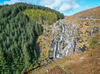
County Wicklow sits an hour south of Dublin, which makes it the easiest drive to reach from Ireland’s primary arrival city. Wicklow earns its Garden of Ireland nickname here, with wooded valleys and fast-flowing streams running below rolling granite peaks. Bray, Greystones, and Wicklow Town all combine a cliff walk with seafood off the boat. Inland, the Sally Gap road climbs into the Wicklow Mountains and carries one of Ireland’s higher road passes at about 1,640 feet. Stretch your legs at the cascading Glenmacnass Waterfall before heading over to Glendalough, a 6th-century monastic settlement known for its stone churches and scenic lakes.
For woodland rather than uplands, drive to County Kerry in the southwest province of Munster. Start at Killarney National Park, the country’s first national park and home to the most extensive native woodland remaining in Ireland. The woodland turns gold and copper, with strawberry trees carrying their red autumn berries. Listen for roaring stags during the red deer rut, which peaks in October. The Ring of Kerry loops down the Iveragh Peninsula— make a point to stop at the Ladies View lookout on the N71 to take in the sights over the Lakes of Killarney. The roads are quieter than in high summer, which makes the pull-ins easier.
Connacht, on the west coast, trades woodlands for the open Atlantic. The Connemara Sky Road loops out of Clifden along the coast. You can see views of Clifden Bay and the offshore islands of Inishturk and Turbot from the car. From the higher pull-ins, the bog below runs rust and ochre against green fields. Save time for a stop at Kylemore Abbey, built in the late 1860s and purchased by Benedictine nuns in 1920. The Victorian walled garden and woodland trails here are open year-round.
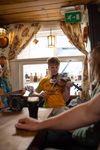
Finally, there’s County Donegal in Ireland’s northernmost province of Ulster. Head to Glenveagh Castle on the shore of Lough Veagh inside Ireland’s second-largest national park. John George Adair built the mansion in the 1870s, and subsequent owners hosted artists, creatives, and stars like Greta Garbo. In southwest Donegal, the Wild Atlantic Way runs out to the Slieve League (Sliabh Liag) sea cliffs, which rise 1,972 feet above the water—nearly three times the height of the Cliffs of Moher. At the end of your day of driving, stop at a pub for seafood chowder on the coast or beef braised in stout if you’re more inland. Plan on extending your stop if someone in the pub picks up an instrument.
Festivals & seasonal events
The Púca Festival builds its programming around the origins of Halloween, with live music, comedy acts, and feasts around the fire across the towns of Trim and Athboy, about an hour from Dublin.
Farther south, the Clonakilty Samhain Festival takes over the West Cork town. The program includes mask-making workshops using natural materials, guided nature walks, and trad-music Samhain Sessions where people play fiddle and bodhrán with no fixed stopping time. The community’s annual Samhain celebration ends with talks on end-of-summer harvest customs, the Púca Parade, and festive fire shows.
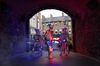
Up north, Derry-Londonderry Halloween started as a small pub party in 1985 and is now considered Europe’s largest Halloween festival that lasts for four days across the city. Visitors from Ireland and around the globe gather to partake in the annual carnival parade, featuring floats and street performers. A light-and-performance trail runs along the 17th-century walls you can walk after dark. The festival closes with a fireworks finale over the Foyle.
The fall calendar reaches well past Samhain. The Galway International Oyster and Seafood Festival opens the oyster season in late September with shucking competitions and stout by the pint. Later in the fall, the Macnas Halloween Parade fills the streets with the giant puppets the company has been building since 1986. County Clare’s Lisdoonvarna Matchmaking Festival runs through September with daily music and set dancing. Willie Daly, Ireland’s last traditional matchmaker, still works from the village.

Folklore, myth, & Samhain origins
Ireland is the birthplace of Halloween, which makes traveling in the fall all the more worthwhile. It grew out of Samhain (pronounced SOW-in), the Gaelic festival marking the end of harvest and, by long tradition, the start of the Celtic year. Irish emigrants carried it across the Atlantic in the 19th century. Samhain runs from the night of October 31 into November 1, the point at which the boundary between this world and the next is believed to be thinnest.
Fires and costumes are still part of Samhain celebrations. So is the food. Báirín breac, a fruited tea loaf whose name translates roughly as speckled loaf, was baked with charms hidden inside—a ring meant marriage within the year; a coin meant money coming. Colcannon, from the Irish cál ceannann or “white-headed cabbage”, is mashed potato with kale, scallions, and butter, and it was served the same way.
The Hill of Ward, outside Athboy, is where 17th-century chronicler Geoffrey Keating placed the first Samhain fire ceremony. Legend goes that this ceremonial blaze, called the Fire of Tlachtga, rekindled all of Ireland’s household fires. In County Roscommon, Rathcroghan is thought to be Europe’s largest unexcavated royal complex and holds the Cave of Cats (referred to locally as Oweynagat). Medieval Christian scribes recorded it as an entrance to the Otherworld; the 12th-century Book of Leinster calls it Ireland’s gate to hell. Book a guided tour at the Rathcroghan Visitor Centre in Tulsk to reach the cave itself.
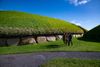
Newgrange, in the Boyne Valley, is a Neolithic passage tomb ringed by 97 kerbstones. You can reach it by guided tour from the visitor center. Duckett’s Grove in County Carlow is a Gothic-revival great house that burned in 1933—the interior is closed, but the restored walled gardens are open daily and free, and they carry a local association with the banshee, the figure in Irish folklore whose cry was said to warn of a death in the family.
October and November are when all of it overlaps: the foliage, the festivals, and the short evenings that push everyone indoors. Pick your stops, leave slack in the driving day, and let your time at the pub at the end of it run long.
Can't miss activities

Places to stay
Ireland
Go further with the Expedia app
